


Northern Lights - Issue 41 - March 2026
Promise for Kids Needing Care
by AMY LANE
In a region with unmet needs for child care, there’s promise for new capacity, one provider at a time.
Pioneering in Leelanau County
Building on a model first launched in Leelanau County, a team of child care and business experts is working with entrepreneurs in Grand Traverse and Benzie counties who want to start or expand home-based child care businesses – an initiative that has several participants and room for more.
Made possible by a $400,000 grant between the Michigan Department of Labor and Economic Opportunity and the Leelanau Early Childhood Development Commission, the Infant & Toddler Child Care Start-Up Expansion program, or ITCS, is providing financial and coaching support to providers and helping with start-up or expansion expenses, training, a business boot camp and other areas.
It’s a unique opportunity, said Mary Ann Behm, program coordinator.

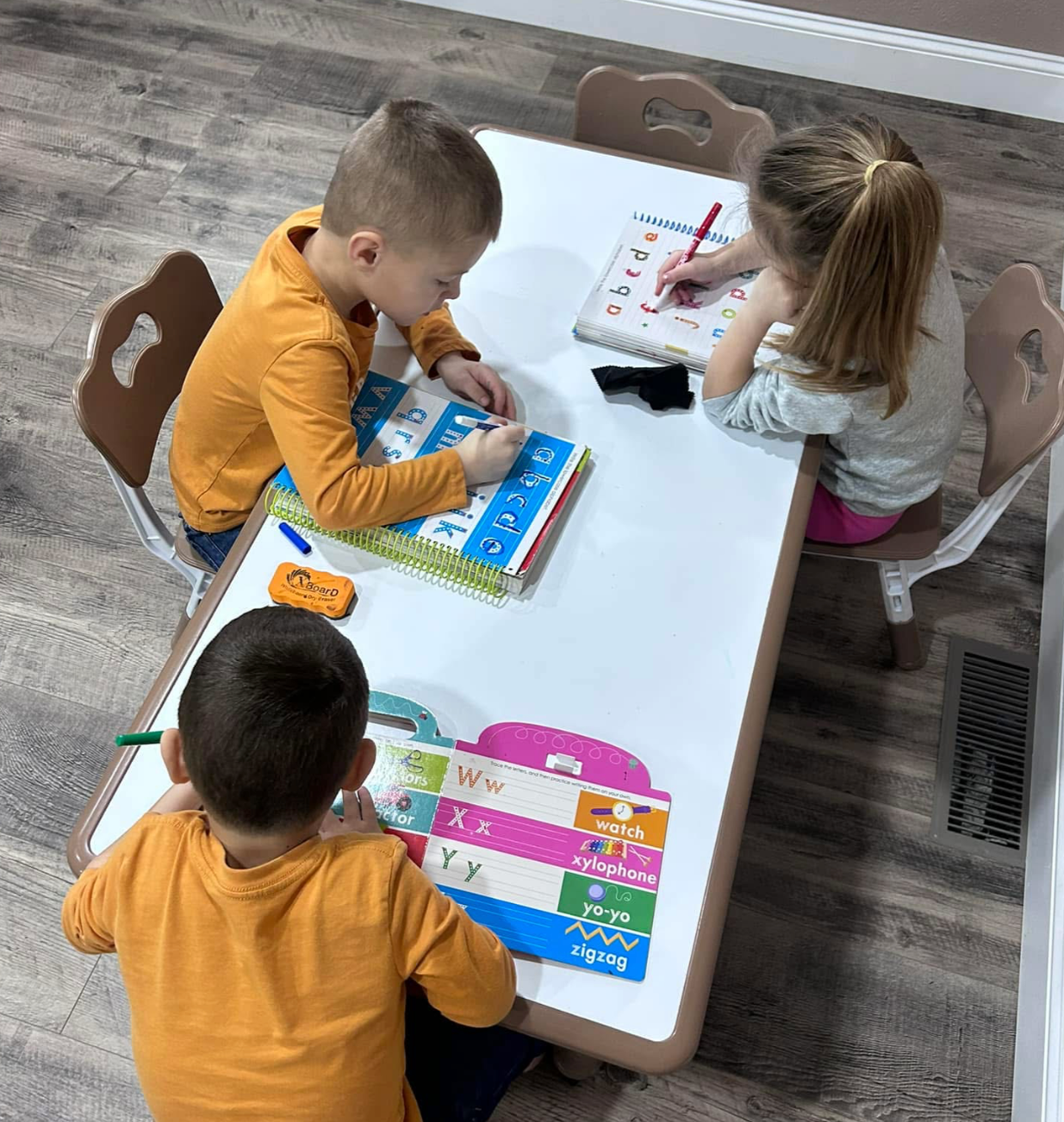
Kayla Jajo, owner of Little Learners Daycare, and Courtney Hunt, owner of Courtney’s Kid Care, attend a training courtesy of a partnership between the. Infant & Toddler Child Care Start-Up Expansion programand Venture North.
The Business of Child Care
“It’s not just the financial assistance, it’s the business boot camp, you have a licensing coach, you have a personal coach – someone who is already in the child care field, who has operated their own in-home care,” Behm said. “It’s the support every step of the way. You get involved with a network. You just feel more connected that way.”
The Grand Traverse and Benzie expansion is modeled after the initial ITCS in Leelanau, which helped child care businesses launch through funding, resources and personal coaching. Patricia Soutas-Little, chair of the Leelanau Early Childhood Development Commission and integral in leading the Leelanau efforts, is program director of the expansion, working with Behm and others including Betsy Evans, Venture North Small Business Coach.
Child Care Spells Success for Economic Development
Venture North, a Community Development Financial Institution, has long had an eye to child care needs. The organization has helped multiple day care centers in the past, providing grants, loans and consulting. And Venture North early-on became involved in the Leelanau efforts, including by offering free consulting services to assist with business planning and coaching, and developing and teaching the multiweek boot camp.
Learning by Boot Camp
The boot camp brings together participants to help them plan, launch, expand and operate child care businesses, covering topics including business plans, legal and regulatory best practices, financial projections, operations and management, marketing and customers. Lasting seven weeks, the boot camps bring into focus how to plan, structure and modify child care operations. And, how to run a business, something entrepreneurs often don’t fully think about as a priority.
“I think it’s an eye-opener to some of the participants about running this as a business,” Evans said. “You go into this with the idea that you love children and you want to care for kids, but you need to make money at this and make it sustainable.”
Another key boot camp takeaway: The “discussion and dialogue that takes place during the workshops between the participants,” sharing experiences and challenges. It provides “great networking,” she said.
Evans facilitates the boot camps, collaborating with Behm, who handles meeting logistics and is at the sessions and available in between meetings to answer participant questions. “I try to do some of the homework too, so that I feel like I’m understanding what’s going on with the enrollees,” Behm said.
Also involved with boot camp is the owner of a group child care home and personal coach, who is on an ITCS advisory team of individuals in child care, nonprofit, or business fields. The advisory team’s partner, provide input and help with aspects of each county’s program, Behm said.
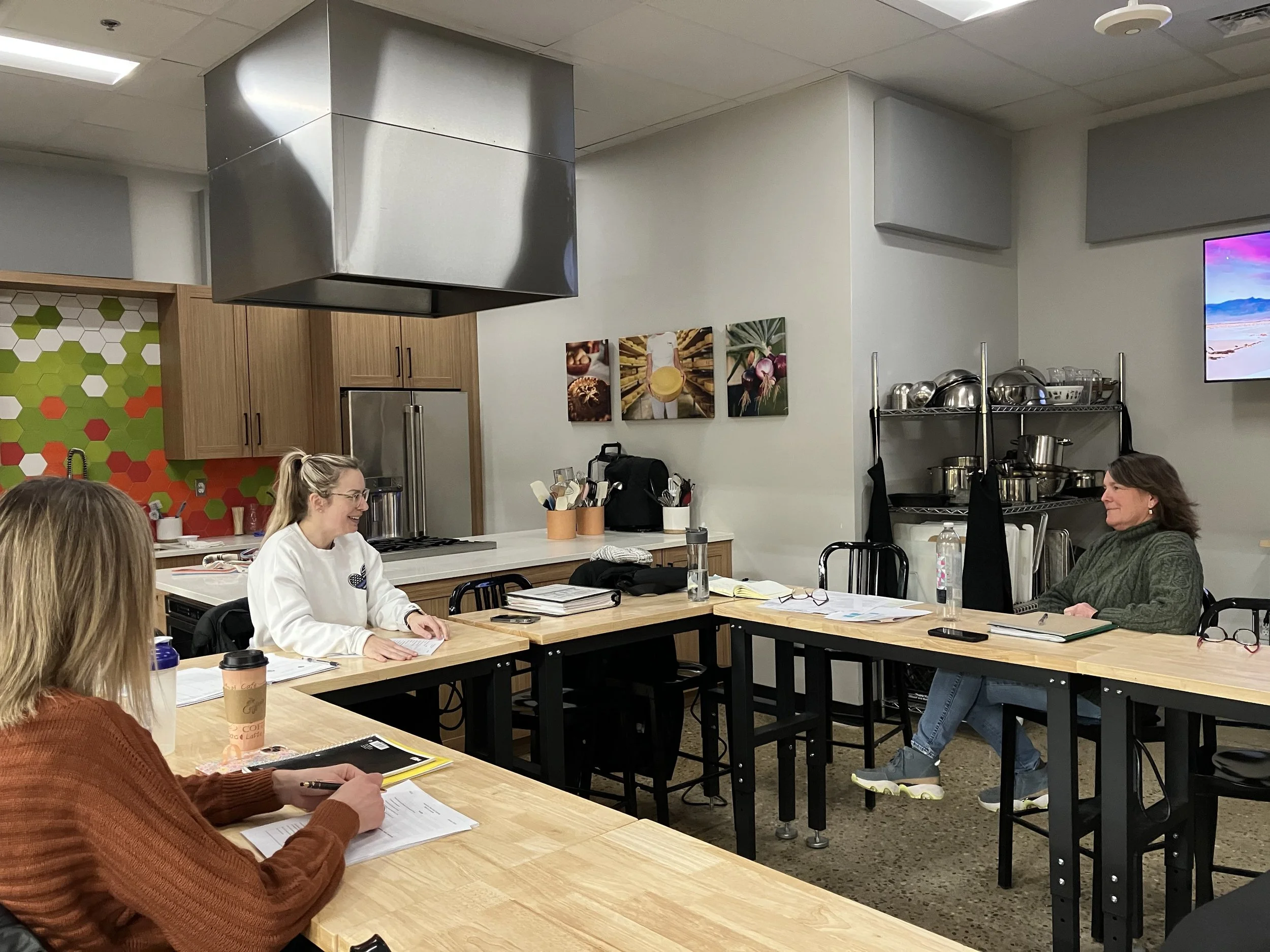
Betsy Evans, right, at a recent boot camp session, says the opportunity to network with other child care providers has been a real bonus for participants.
Spreading Child Care Success
Applicants to the ITCS are screened by Behm and interviewed by her and Soutas-Little. An initial cohort of three participants from Grand Traverse and Benzie – one who is starting a family home day care and two who are expanding their family homes to group homes with larger capacity – wrapped up boot camp in February.
A second cohort has one participant and “we’re still enrolling, slots are still available,” Behm said. “We’re hoping to get more interested people who would be wanting to do this.”
“Child care is a community issue…and important for growth. If you have a child care system that can have quality and give parents a choice, it’s only going to help foster economic development.”
Mary Ann Behm, Program Coordinator, Infant & Toddler Child Care Start-Up Expansion
Supporting a Caring for Kids Model
Norika Kida Betti, child care initiatives coordinator for Networks Northwest, which leads one of 10 regional coalitions in the state looking to increase child care availability and improve access to care, said ITCS is “a really innovative model for how a community can support child care businesses getting started. At a broader regional level there’s a lot we can learn about how they’ve provided that support and how much support they’ve been able to give to providers to get started.”
She said part of the work of the Northwest Regional Child Care Coalition is to look at examples like ITCS and how it might be possible to “take aspects of that and try and replicate it…in a way to help child care businesses expand throughout the region.”
Made up of child care providers, economic development organizations, leaders from local government, education and business, parents and others, the coalition’s goal is to develop and implement sustainable solutions that are tailored to the region’s specific child care challenges.
Those challenges, highlighted in a 2024 regional child care plan that guides the coalition’s work, include: Insufficient capacity to meet the needs of families with young children, particularly infants and toddlers; families seeking a variety of care options; widespread effects on employers and economies because of gaps in the regional child care system; and few incentives for child care educators to remain in the field.
The coalition is looking “to figure out where are the areas that we can really make an impact to allow child care businesses to start up or expand or make it more likely that people will be more interested in working in the child care area,” Kida Betti said. “There’s not one specific approach, but really trying to look at what are the ways to do this.”
Child Care Stipends
Northwest coalition priorities this year include educating local governments on zoning policies that will remove barriers for new and expanding child care businesses, and a wage initiative awarding some 200 monthly stipends to child care educators throughout the region. That initiative, supported by state School Aid money and in-kind matching funds from local partners, provides $300 a month for full-time educators who are working more than 30 hours a week, and $200 for part-time educators working 20 to 30 hours weekly, Kida Betti said.
“The hope is it will demonstrate the power of increasing early childhood educators’ wages and make it so that they will stay in the field,” she said. “The coalition will also be working on developing a plan for sustainability and expansion.”
Another priority: A new child care technical assistance team that is “looking at developing a system and structure” to support new and expanding child care businesses. Venture North is a regional coalition member and President Laura Galbraith and Evans are on the technical assistance team.

Mary Ann Behm, Program Coordinator for ITCS and Betsy Evans, Venture North Small Business Coach, join forces to offer a multi week boot camp focused on how to plan, structure and modify child care operations and, broader, how to run a business.
Success Through Partnership
“I feel hopeful about the fact that so many partners are involved with this complex challenge of expanding child care in our region. I think there’s more and more realization that child care is an economic issue and that we really need to bring everyone on board if we’re going to solve it,” Kida Betti said. “It’s really exciting that Venture North continues to be involved in child care and potentially do more throughout the region, along with other partners who are interested in figuring out how they might help support the system.”
Where Venture North Fits
Behm said Venture North understands “that child care is a community issue…and important for growth. If you have a child care system that can have quality and give parents a choice, it’s only going to help foster economic development.
“I think Venture North looks at things more holistically. They understand the bigger picture.”
A Rural Model for Others
With the ITCS expansion, Behm strengthened and formalized processes and procedures that were part of the Leelanau program and said the ITCS is “a great model” that she sees could be replicated elsewhere. “I think the pieces are in place, I think another county could choose what they want to do with it. I think it would be great if other counties would pick it up,” she said.
That’s a hope, said Venture North’s Evans. “We’re hoping that it’s a model that can happen and continue to happen in other counties. It has a lot of potential, and there’s still a great need for child care in our region. I am hoping it is a model that can be replicated over and over.”
Tools for Success
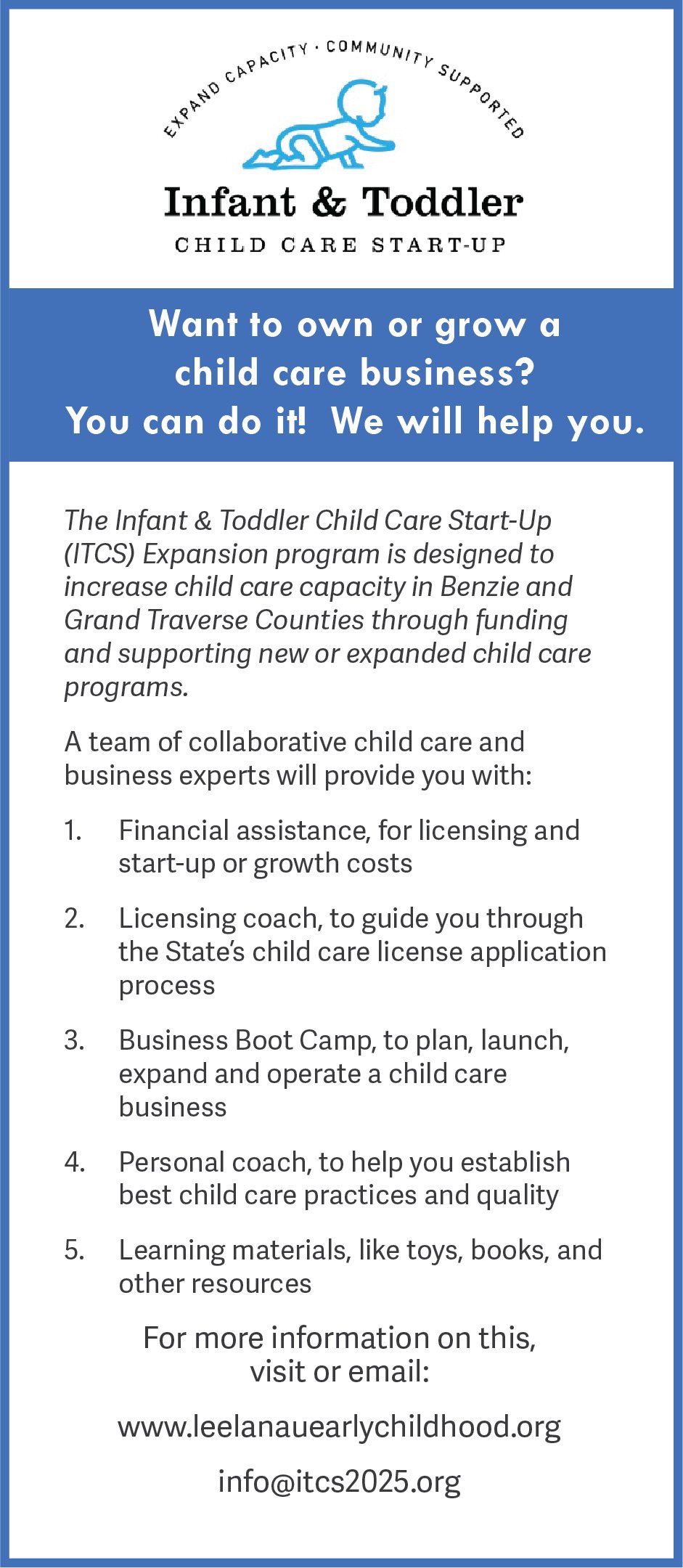
ITCS program support includes: financial assistance for licensing and start-up or growth costs; a licensing coach to help with the state license application process; the boot camp; a personal coach to help establish best child care practices and quality; and learning materials like toys, books and other resources.
Behm said the ITCS program gives “someone all the tools that they would need.”
And it’s about more than expanding child care capacity; it helps providers have sustainable and successful businesses, she said. “It is about increasing capacity, but it’s also about sustainability and making sure that the people who are running this can make a livable wage, and that they can sustain this.”
A Continuum for Help
During boot camp and beyond, Venture North’s Evans said she is happy to provide support. “Venture North offers our business development services and no-cost consulting to support entrepreneurs, so even after boot camp is done, they can reach out, I can assist,” she said.
And as the first group of participants moves ahead on their business plans, Evans said they have done the work. “I really feel good about (them), and I think we’re going to be hearing good success stories for years to come.”
Amy Lane is a veteran Michigan business reporter whose background includes work with Crain Communications Inc., Crain’s Detroit Business and serving as Capitol correspondent for nearly 25 years. Now a freelance reporter and journalist, Lane’s work has appeared in many publications including Traverse City Business News.
